

Will President-elect Trump Use Public Health To Justify An Immigration Crackdown? SchulzLaw Blog January 13, 2025
By C. Matthew Schulz
In a recent development, President-elect Donald Trump is reportedly seeking a public health justification to implement stringent immigration policies upon taking office. This approach mirrors strategies employed during his first term, notably the invocation of Title 42 during the COVID-19 pandemic to restrict immigration.
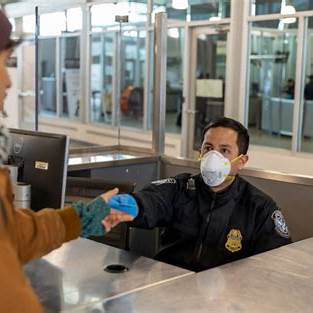
Title 42 and the COVID-19 Precedent
Title 42 of the U.S. Code grants federal health authorities the power to prohibit the entry of individuals from countries where a communicable disease is present. In March 2020, amid the escalating COVID-19 crisis, the Trump administration invoked this provision to swiftly expel migrants at the U.S. borders, effectively suspending the processing of asylum claims and significantly reducing both nonimmigrant and immigrant visa issuances. Executive orders were issued that caused U.S. consular posts to close and, when reopened, immigrant visas and nonimmigrant visas that authorize employment in the U.S. were restricted until after President Biden took office. This measure by then President Trump was framed as a necessary step to prevent the spread of the virus within the United States.
Current Efforts to Reinstate Health-Based Immigration Restrictions
According to a recent report by The New York Times, the incoming Trump administration is exploring avenues to reinstate similar health-based immigration restrictions. The claimed objective is to identify a health threat that would justify the reimplementation of policies akin to Title 42, thereby enabling the administration to swiftly expel migrants and limit asylum processing at the borders. This strategy underscores a broader agenda to enforce stricter immigration controls by leveraging public health authorities.
Implications and Considerations
The use of public health justifications for immigration restrictions has been a subject of debate. Proponents argue that such measures are essential for safeguarding public health and national security. Critics, however, contend that these policies may circumvent established legal processes for asylum seekers, restrict international travel key for businesses (including hospitality/travel industry and education) and could be utilized to advance broader anti-immigration objectives under the guise of public health.
As the Trump administration prepares to assume office, the legal and ethical dimensions of employing health-related justifications for immigration policy are likely to be scrutinized. The potential reinstatement of measures similar to Title 42 raises questions about the balance between public health concerns and the rights of individuals seeking entry into the United States.
Conclusion
The precedent set during the COVID-19 pandemic illustrates how public health provisions can be utilized to effect significant changes in immigration policy. The incoming administration's current efforts suggest a continuation of this approach, with potential implications for migrants and the legal frameworks governing U.S. immigration.