

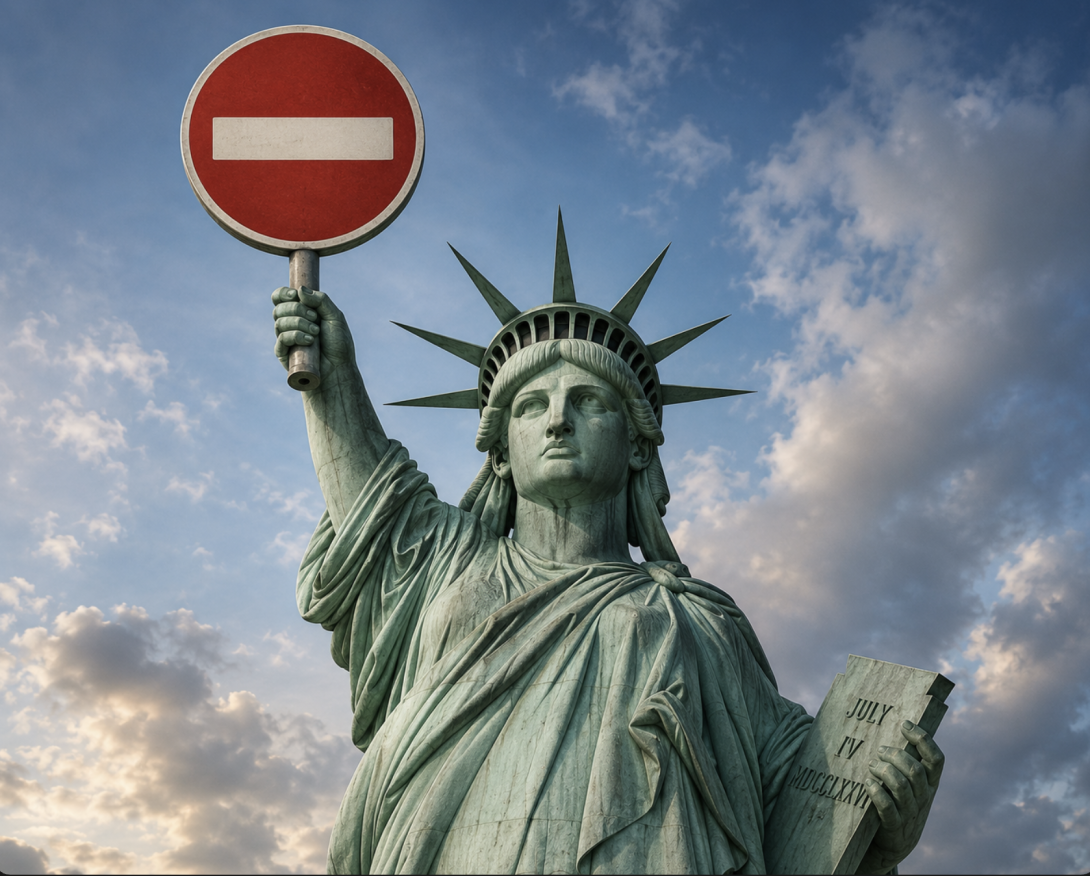
DHS Ends "Duration of Status" for F, J, and I Visa Holders: What the New Rule Means for Students, Universities, Employers, and the U.S. Economy
By C. Matthew Schulz
The U.S. Department of Homeland Security (DHS) issued a sweeping final rule that fundamentally changes how foreign academic students (F visas), exchange visitors (J visas), and foreign media representatives (I visas) are admitted and allowed to remain in the United States. Beginning September 15, 2026 (subject to Congressional Review Act procedures), the rule replaces the long-standing "Duration of Status" (D/S) system with fixed periods of admission and requires many foreign nationals to seek formal Extensions of Stay (EOS) from U.S. Citizenship and Immigration Services (USCIS). This represents one of the most significant changes to student immigration law since the implementation of SEVIS after the September 11 attacks.
The rule will have five immediate practical effects. First, students and exchange visitors will generally receive admission for a fixed period rather than remaining in status for the duration of their educational program. Second, many individuals in longer academic or exchange programs will need to file Extension of Stay applications with USCIS. Third, universities, colleges, hospitals, and other J-1 sponsors will assume additional compliance responsibilities while USCIS becomes more directly involved in determining continued eligibility. Fourth, restrictions on transfers, educational changes, and English-language study become substantially tighter. Finally, overstays will become easier for DHS to identify and enforce because admission periods will expire on specific dates rather than remaining open-ended.
The complete final rule, titled Establishing a Fixed Time Period of Admission and an Extension of Stay Procedure for Nonimmigrant Academic Students, Exchange Visitors, and Representatives of Foreign Information Media, is available in the Federal Register at: https://www.federalregister.gov/ (search using DHS Docket No. ICEB-2025-0001 or RIN 1653-AA95).
Elimination of Duration of Status (D/S)
For nearly fifty years, most F-1 students and J-1 exchange visitors were admitted for "Duration of Status." Instead of receiving a specific expiration date on their admission, they generally remained in lawful status as long as they complied with the requirements of their educational or exchange program.
The new regulation largely eliminates this D/S. Mst F, J, and I nonimmigrants will receive admission until a specific expiration date.
According to DHS, this change is intended to improve oversight by requiring periodic interaction between the nonimmigrant and USCIS rather than relying primarily on schools or exchange sponsors to monitor compliance.
New Extension of Stay Requirement
Perhaps the most significant operational change is the creation of a much broader Extension of Stay process.
Under the previous system, many students could remain in the United States for years without ever filing another application with USCIS, provided their Designated School Official (DSO) properly extended their Form I-20 or their Responsible Officer extended their Form DS-2019.
Under the new rule, USCIS—not simply the school or exchange sponsor—will determine whether many students and exchange visitors remain eligible to continue their stay. Applicants must demonstrate continued eligibility, maintenance of status, financial support, admissibility, and compliance with immigration laws.
Four-Year Maximum Admission Period
For most F and J visa holders, DHS will admit the individual for the length of the academic or exchange program, but generally not longer than four years at a time.
Programs extending beyond four years—including many doctoral programs, medical training programs, and certain research appointments—will generally require an Extension of Stay before completion.
DHS emphasizes that this is not intended to force students to complete their degree within four years. Rather, it creates a checkpoint during longer programs at which USCIS can reassess continued eligibility.
Shorter Grace Period
Current regulations generally allow F-1 students sixty days after completion of their academic program or authorized practical training before departure or change of status.
The new rule shortens this period to thirty days. Students who terminate their studies early generally will have only thirty days to depart the United States or obtain another lawful immigration status.
Restrictions on School Transfers and Academic Changes
The final rule significantly narrows students' flexibility to transfer schools or change academic objectives.
Graduate students generally may not transfer institutions or change educational objectives during their program absent limited exceptions approved by the Student and Exchange Visitor Program (SEVP).
Students in their first academic year also face new transfer limitations unless specifically authorized.
These provisions are designed to reduce what DHS characterizes as abuse of the transfer process by individuals seeking to remain in the United States indefinitely through repeated enrollment changes.
English Language Programs
Students enrolled solely in English language training programs will generally be limited to an aggregate stay of twenty-four months, including breaks and annual vacations.
DHS concluded that some students had remained in English-language programs for many years without progressing to degree programs, contrary to the intended purpose of the F-1 classification.
Easier Accrual of Unlawful Presence
Under the previous Duration of Status system, unlawful presence often did not begin until USCIS or an immigration judge formally determined that the student had violated status.
Under the new framework, expiration of the fixed admission period creates a much more straightforward mechanism for unlawful presence to accrue if no Extension of Stay or other lawful status exists. This change may significantly increase the immigration consequences of remaining in the United States beyond the authorized admission period.
Analysis: How the New Rule Differs from the Prior System
The prior system relied heavily upon educational institutions and exchange sponsors to monitor compliance. Schools determined whether students remained academically eligible and routinely extended Forms I-20 without direct USCIS involvement. The new rule shifts much of this responsibility back to USCIS, requiring direct government review during longer periods of stay.
The previous Duration of Status framework emphasized flexibility. Students could often extend programs because of research, dissertation work, academic delays, or changes in educational goals without filing new immigration applications. The new rule replaces that flexibility with greater governmental oversight and periodic adjudications.
Historically, unlawful presence was relatively difficult to establish against F and J students because D/S admissions did not expire on a fixed date. DHS argues this complicated enforcement of immigration laws. The new regulation creates clearly defined admission periods, making enforcement significantly easier.
The prior transfer rules generally allowed substantial educational flexibility. Graduate students frequently transferred institutions or academic programs. The new rule imposes much stricter limitations, reflecting DHS's conclusion that repeated transfers have occasionally been used to extend residence in the United States without legitimate academic justification.
The new regulation also increases costs. Students in longer academic programs will now incur additional government filing fees and, in many cases, legal expenses associated with Extension of Stay applications. Universities and exchange sponsors likewise face additional compliance obligations and will likely devote additional staff time to assisting students.
The practical effect is a significant transfer of authority from educational institutions to federal immigration officials.
 Overall U.S. Economy
The overall macroeconomic impact is likely to be modest rather than dramatic to the U.S. economy, contrary to what some politicians have stated.
International students do contribute billions of dollars annually through tuition, housing, transportation, food, healthcare, and other consumer spending. But the overall U.S. economy is much larger.
Some reduction in enrollment is likely, particularly among students who view competing countries as offering more predictable immigration systems. However, the United States continues to possess many of the world's leading universities, research institutions, and employers, which should continue attracting substantial international enrollment. That said, academic institutions in other countries increasing compete for international students, professors, and researchers.
Academic Institutions
Universities, colleges, teaching hospitals, and research institutions will likely experience increased compliance costs. Institutions employing large numbers of international students or exchange visitors will devote additional resources to immigration advising and planning.
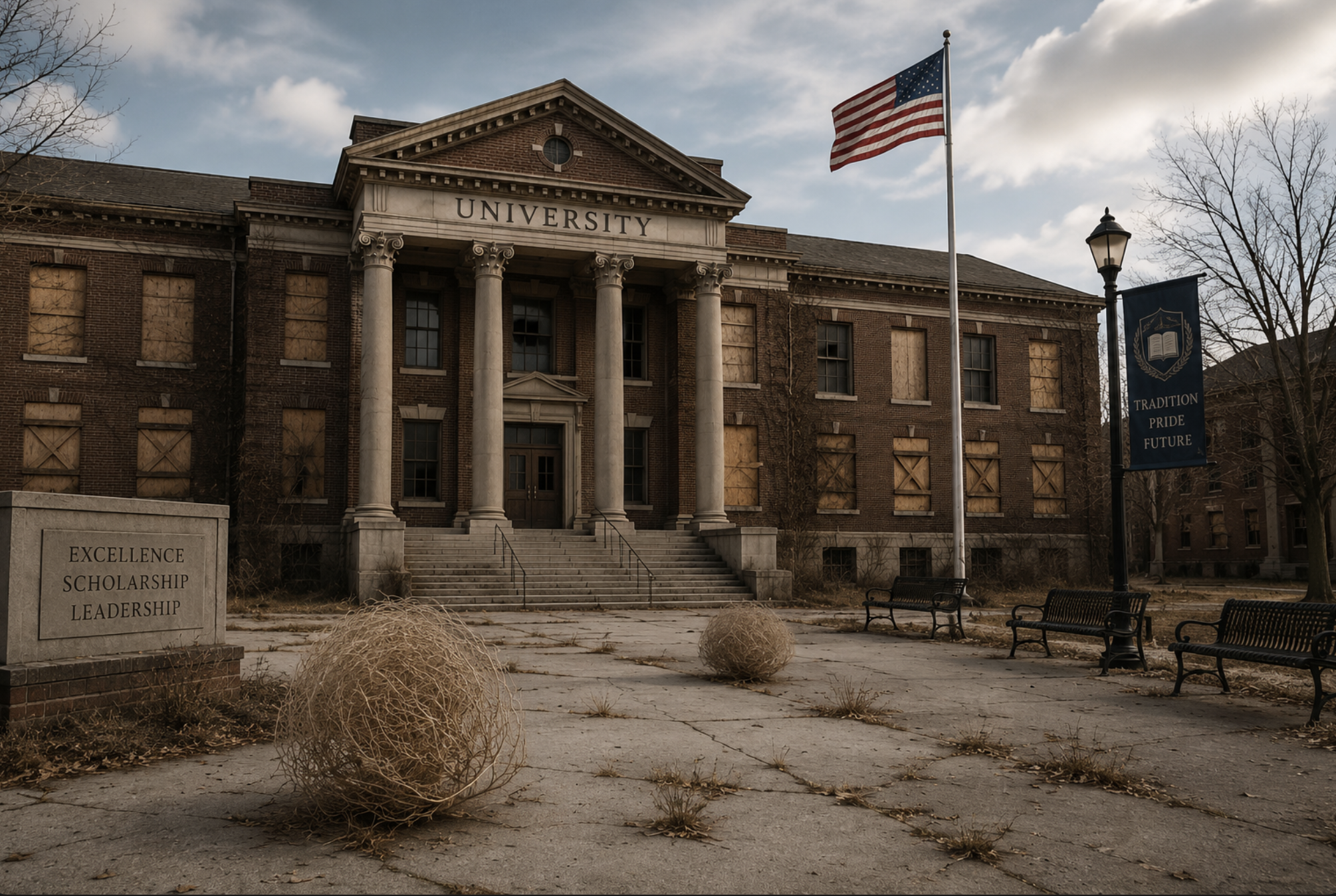
Some institutions—particularly smaller private colleges or those heavily dependent upon international tuition—could experience financial pressure if enrollment declines. Others, particularly elite research universities, may experience comparatively little change because global demand for admission remains exceptionally strong.
U.S. Employers
Employers relying upon OPT participants or J-1 exchange visitors can expect to encounter somewhat greater administrative complexity and occasional hiring delays while immigration applications remain pending.
Nevertheless, the rule does not eliminate OPT or the J-1 program. Rather, it adds additional procedural requirements before many individuals can continue their authorized stay.
Foreign Students
Foreign students bear the largest direct burden.
Many students pursuing graduate degrees, doctoral programs, medical training, or extended research projects will now face additional filing requirements, government fees, planning obligations, and immigration uncertainty.
Students will need to monitor expiration dates carefully because missing an Extension of Stay filing deadline could have serious immigration consequences.
Impact on Jobs for U.S. Workers
Supporters of the rule argue that reducing international student participation could modestly improve employment opportunities for some U.S. workers, particularly in positions frequently filled by recent international graduates.
Whether this occurs on a measurable scale remains uncertain. International students often occupy specialized research, graduate teaching, or technical positions that do not necessarily compete directly with most domestic workers. Many also generate economic activity that supports additional U.S. jobs through university spending, research funding, and consumer expenditures.
The actual labor market effects will likely vary substantially by industry, geographic region, and occupation.
Housing, Home Purchases, and Residential Rents
Some commentators have argued that international students and temporary foreign workers increase housing prices and residential rents by adding demand to already constrained housing markets. Those are political claims to rouse their followers and unsupported by any research or facts.
From a nationwide perspective, however, international students represent a relatively small share of the overall U.S. housing market. The United States contains well over 140 million housing units, while international students are heavily concentrated near a relatively small number of universities. Consequently, any measurable housing effects are likely to be localized rather than national.
In certain university communities, international enrollment may contribute to demand for apartments and rental housing. However, broader housing prices are driven primarily by interest rates, housing supply, zoning restrictions, construction costs, population growth, and overall economic conditions.
It is also important to recognize that higher home values and rental income are not purely costs. Millions of Americans—particularly retirees and older homeowners—depend upon home equity appreciation and rental income as important components of their retirement security. Landlords, many of whom own only one or two rental properties, likewise depend upon rental income to meet mortgage obligations, property taxes, insurance, and retirement planning.
Residential construction also responds to housing demand. Strong housing markets support architects, engineers, surveyors, developers, construction workers, electricians, plumbers, HVAC technicians, roofers, painters, landscapers, real estate professionals, mortgage lenders, title companies, inspectors, building material manufacturers, appliance manufacturers, furniture retailers, and countless related industries. Reduced housing demand may ease prices for some buyers and tenants, but it can also reduce new residential construction, affecting employment throughout the construction and manufacturing sectors.
For these reasons, the housing effects of immigration policy involve complex economic tradeoffs rather than simple winners and losers.
Conclusion
The DHS final rule represents a major shift in the administration of F, J, and I nonimmigrant classifications. Although many foreign students and exchange visitors will continue to study and work in the United States successfully, the new framework introduces significantly greater USCIS oversight, additional filing requirements, reduced flexibility, and more direct immigration enforcement.
Universities, employers, exchange sponsors, and international students should begin preparing now for these changes and carefully review compliance procedures before the rule takes effect.
For additional analysis of this rule and other immigration developments affecting employers, investors, executives, students, and immigration professionals, please visit https://schulzlaw.us.